Article: Beef Jerky 101: Everything You Need to Know About This Popular Snack
%20However,%20upon%20examining%20the%20packaging%20and%20the%20brown%20strips%20within,%20one%20cannot%20help%20but%20feel%20...)
Beef Jerky 101: Everything You Need to Know About This Popular Snack
Beef Jerky 101: A Complete Beginner’s Guide
Beef jerky might seem self-explanatory. (Hello, dried beef.) However, upon examining the packaging and the brown strips within, one cannot help but feel that the meat comes with a mystery.
And mysteries make for good entertainment, not snacks.
Here at Lazy T Ranch, we believe food shouldn’t have question marks. Our beef jerky is all-natural and sourced from cattle raised in Wyoming. We love beef jerky for its convenience, versatility, and nutritional components. (A day of cattle work is ten times better with jerky in our saddle bag.)
Packed with protein and flavor, beef jerky is one of the most popular snacks on the market, generating over a billion dollars in annual revenue. If you’ve ever wondered what beef jerky really is, how it’s made, how healthy it is, or how long it lasts, this guide will walk you through everything you need to know and help you choose the best beef jerky.
What Is Beef Jerky?
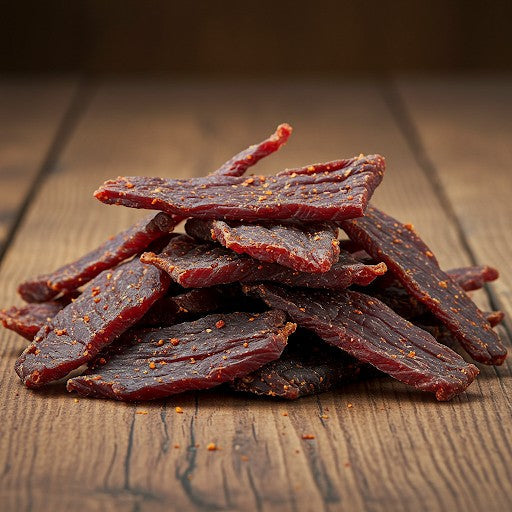
Beef jerky is lean beef that has been marinated, seasoned, and dried. The dehydration process preserves the meat, concentrates the flavors, and gives the jerky its signature chewy texture.
Jerky isn’t a new concept. Early civilizations dried and smoked meat to prevent spoilage and create portable food. Although modern processes are more refined, the idea is the same: turn meat into a convenient snack that stays fresh for weeks or months without refrigeration.
Yes, all beef jerky is made from beef, but not all beef jerky is of equal quality. Sourcing matters. Be wary of jerky brands that don’t eagerly disclose their beef producers and ingredients. Even your favorite jerky brand might use chemicals and other additives.
How Beef Jerky Is Made
1. Choosing the Cut of Meat
Contrary to popular belief, not all beef makes great jerky. Lean cuts work best since fat can spoil quickly. The preferred cuts for beef jerky include:
- Eye of round
- Top round
- Bottom round
- Flank steak
- Sirloin tip
These cuts offer a balance of flavor, texture, and affordability.
It’s worth noting that lean beef doesn’t always mean “no fat.” Even lean cuts of beef, when sourced from fattened cattle, offer marbling and a tender texture. That’s what we look for when choosing beef cuts for our ranch-raised jerky! We like tender, melt-in-your-mouth, flavorful beef jerky. And most of the time, that kind of jerky doesn’t come from old, lean cattle; it comes from high-quality cattle.
2. Marinating and Seasoning
Otherwise known as the recipe for success! When making beef jerky, marinating and seasoning are where the magic happens. Beef jerky flavors range from savory, sweet, spicy, smoky, and exotic.
A typical beef jerky marinade includes:
- Soy Sauce or Worcestershire
- Salt and pepper
- Garlic and onion
- Brown sugar or honey
- Chili flakes or cayenne
The beef usually marinates for 6–24 hours, allowing the seasonings to absorb into the meat fibers.
3. Drying or Dehydrating
Once marinated, the beef strips are placed in either a dehydrator, a low-temperature oven, or a smoker. The strips are typically dried at 160–175°F (70–80°C) for several hours to remove moisture, preserve flavor and tenderness, and make the jerky shelf-stable.
Nutrition & Health Benefits
Beef jerky is more nutrient-dense than other snacks. A small serving offers protein, vitamins, and minerals, everything found in beef but concentrated in dried strips.
High Protein
Most beef jerky contains 9–15 grams of protein per ounce, making it a convenient option for:
- Fitness enthusiasts
- Busy workers
- Kids needing quick snacks
- Anyone maintaining a high-protein diet
Low Fat (Usually)
Because jerky is made from lean cuts, it tends to be low in fat. Some premium or artisanal varieties may include a bit more marbling for flavor — but generally, jerky remains a lean option.
Rich in Minerals
Beef jerky naturally contains:
- Iron
- Zinc
- B vitamins
These nutrients support energy levels, immune health, and muscle function.
What About Sodium?
Most beef jerky is high in sodium due to the curing process. This isn’t necessarily a problem for everyone, but individuals who are watching their salt intake should check the label or opt for low-sodium varieties.
Store-Bought vs. Homemade
Store-bought jerky often contains preservatives (like nitrates) to extend shelf life. Homemade jerky may be fresher and lower in sodium, but it has a shorter lifespan and requires careful food-safety practices.
At Lazy T Ranch, our beef jerky is made without nitrates and nitrites. We also avoid MSG, chemicals, and use beef without added hormones. Although our beef jerky is best consumed within a week of opening the bag (for peak freshness), it has a year-long shelf life, proving that unnatural preservatives aren’t necessary for great beef jerky.
Types of Beef Jerky
Jerky comes in a variety of flavors! Popular types include classic smoked jerky, teriyaki, spicy, and more.
Here is a full list of our jerky flavors:
How to Store Beef Jerky
Although beef jerky has a long shelf life, it should be carefully stored.
Unopened Jerky
Unopened bags of beef jerky can last up to a year due to the dehydration and airtight packaging.
After Opening
To preserve freshness, transfer the jerky from the opened bag to an airtight container or resealable bag. Store in a cool, dry place, preferably the refrigerator. We’ve found that storing beef jerky in the refrigerator prolongs its freshness for 3-4 weeks.
Homemade Jerky
Since it lacks commercial preservatives, homemade jerky has a much shorter shelf life. It lasts about 1 week at room temperature, 2–3 weeks in the refrigerator, and up to 3 months in the freezer. (If you make your own jerky, double-check that it’s fully dry to avoid mold growth.)
Common Beef Jerky Questions
Is beef jerky healthy?
Yes, in moderation! Beef jerky is high in protein and low in fat; however, some store-bought varieties may contain added sugar, preservatives, and plenty of sodium. For the healthiest option, choose high-quality or small-batch beef jerky.
Why is beef jerky so expensive?
Jerky requires a lot of raw beef. On average, it takes 3 pounds of beef to make around 1 pound of jerky. Add marinating, slow drying, and quality ingredients, and the jerky’s price tag starts to make sense.
Can you make jerky at home?
Sure! A dehydrator is the most convenient option for making beef jerky at home, but an oven also works. Just be sure to slice the meat thinly and follow safe drying guidelines.
Is jerky supposed to be chewy?
Good jerky is firm, flexible, and tears easily with your teeth!
Conclusion
Beef jerky is a nutritious, protein-packed, and versatile food with a long history. Available in a range of flavors, beef jerky offers something for everyone.
Now that you know what beef jerky is, how it’s made, and how to store it, you’re ready to explore the world of jerky with confidence. Browse Lazy T Ranch’s beef jerky options here.
About Lazy T Ranch:
Lazy T Ranch is a generational cattle ranch located in Ten Sleep, Wyoming. Since the 1940s, we have raised beef the Western Way, with cowboys on horseback.
Our jerky is made from the highest-quality Wyoming beef. Minimally processed and flavored with the best natural ingredients, our beef jerky captures the taste of the Wild West and honors the history of cattlemen who came before us.